After twelve years of living with portable heaters in drafty old houses, I've made most of these mistakes myself. I've also seen them repeated constantly in owner reviews, reader emails, and conversations with neighbors who wonder why their heater stopped working after one season — or, more seriously, why it tripped the breaker at 2 a.m.
None of these missteps are obvious at first. That's what makes them worth talking about. Here are the seven I see most often, and what to do instead.
The pattern
Most heater problems aren't caused by faulty products — they're caused by reasonable-seeming habits that quietly work against safety and efficiency. A few small changes make a real difference.
Mistake 1: Running it off an extension cord
This is the big one. Space heaters draw serious current — most 1,500-watt models pull around 12.5 amps — and a standard extension cord isn't built to handle that load continuously. The cord heats up, the insulation softens, and you have a fire hazard sitting on your floor.
Plug your heater directly into a wall outlet. If the outlet isn't in the right spot, rearrange the room rather than string a cord. If you absolutely must use an extension cord in a pinch, use a heavy-duty 14-gauge or thicker cord rated for at least 1,875 watts — and even then, keep the run short and never tuck it under a rug.
Mistake 2: Overestimating how much space one heater can warm
A 1,500-watt heater is rated to heat roughly 150 square feet in a well-insulated room. Put it in a 300-square-foot open-plan kitchen-living area, leave the door to the hallway open, and it will run flat-out all day, still feel cold, and cost a lot to operate. The heater isn't broken — it's just undersized for the job you're asking it to do.
Close the doors. Zone-heat the room you're actually in. Or pick a unit sized for the actual space. Our room-size guide walks through the wattage math in plain English.
Mistake 3: Placing it too close to furniture or soft furnishings
Most heater manuals specify a minimum clearance — usually 3 feet on all sides. In a small bedroom or home office, that feels inconvenient, so people push the heater closer to the sofa or up against a curtain. Radiant and ceramic heaters in particular can scorch fabric, and the risk compounds over hours of continuous use.
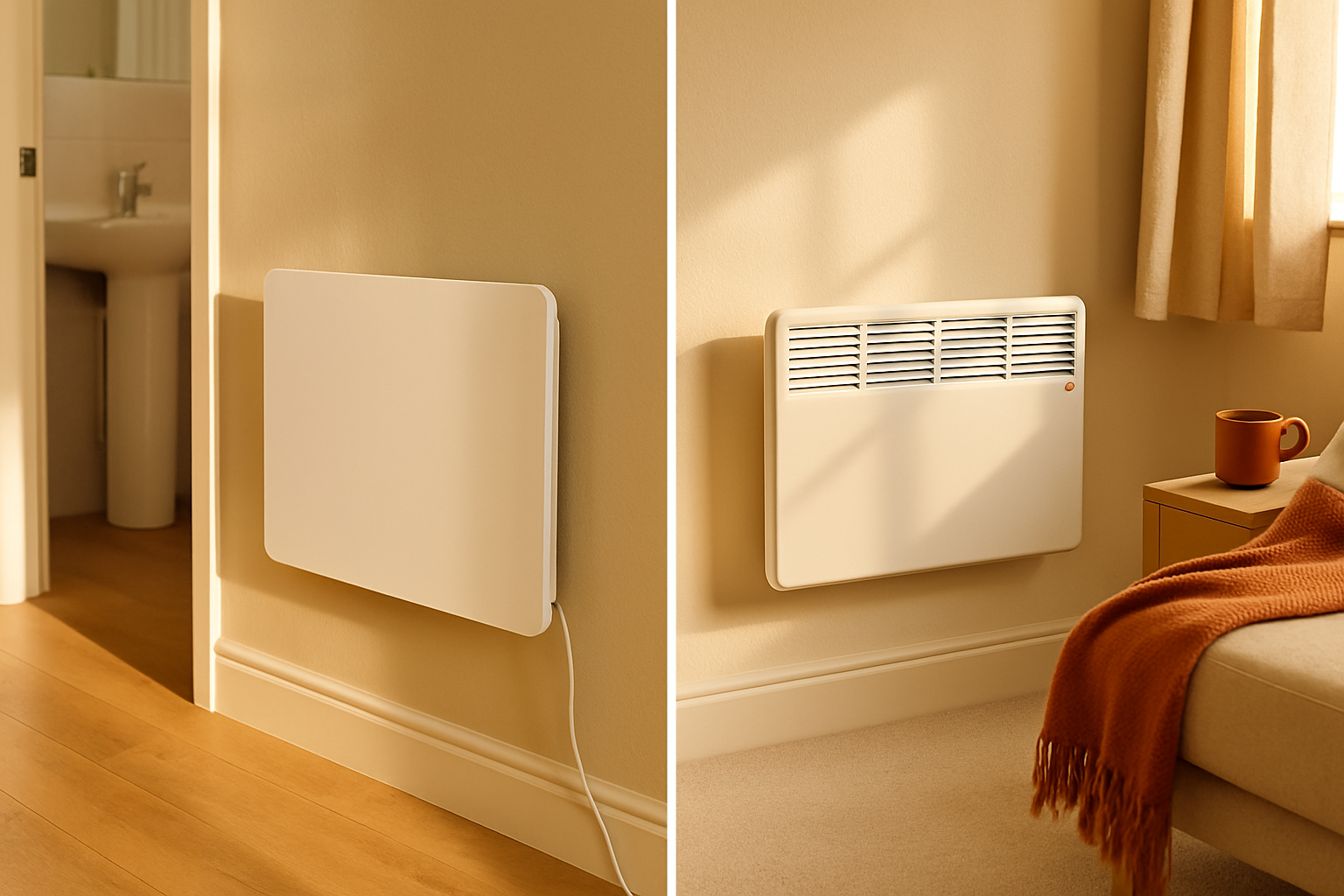
Treat the 3-foot rule as a hard minimum, not a suggestion. If the room doesn't have space for that clearance, a wall-mounted panel heater is a better fit than a freestanding unit on the floor.
Mistake 4: Leaving it on unattended or overnight (without the right unit)
Some heaters are genuinely designed for overnight use — oil-filled column radiators have low surface temperatures, no exposed elements, and run quietly for hours. Most ceramic fan heaters are not. The distinction matters, and the manual will tell you which category your heater falls into.
If you want warmth through the night, choose an oil-filled radiator with a thermostat and overheat protection. Set it to a low temperature rather than high, and let the thermostat cycle it. Don't leave a fan heater or a radiant bar heater running while you sleep.
Mistake 5: Blocking the intake or output vents
Fan-assisted heaters pull cool air in from the back or bottom and push warm air out the front. If the intake is against a wall, pressed into a corner, or covered by a dropped towel or a pet bed, the heater can't draw enough air. It runs hotter than it should, the overheat cutoff trips repeatedly, and the internal components wear out faster.
Give the heater room to breathe on all sides. After setting it down, run your hand around the back to feel whether air is being drawn in freely.
Reviewer's note
The single most underused feature on most heaters is the built-in thermostat. Setting it to maintain 68–70°F rather than running on full-blast high heat saves meaningful electricity and extends the life of the unit — the motor and element cycle on and off rather than grinding continuously.
Mistake 6: Ignoring the thermostat and leaving it on "high"
It seems intuitive: colder room, higher setting, faster warmth. But once a room is up to temperature, running a heater on high just overshoots, makes the room stuffy, and costs more to run. Most modern heaters have a thermostat that will cycle the unit on and off to hold a target temperature — use it.
Set the thermostat to your comfort temperature and let the heater manage itself. You'll use less electricity, the room will feel more even, and the heater will last longer because it isn't running flat-out for hours on end.
Mistake 7: Skipping the annual dust-out
Over a heating season, dust accumulates on the internal grilles, heating elements and fan blades of any portable heater. That dust insulates the element, makes the fan work harder, and — in the worst case — becomes a burning smell or a fire risk the first time you plug it in the following autumn.
Before storing a heater for the off-season, unplug it, let it cool completely, and use a can of compressed air or a soft brush to clear the vents and grilles. Takes five minutes. When you bring it back out in the fall, do the same before you plug it in. It's the easiest maintenance habit in heating, and almost nobody does it.
| Mistake | The real risk | The fix |
|---|---|---|
| Extension cord use | Fire hazard from cord overload | Wall outlet only |
| Wrong size for the room | Wasted electricity, still cold | Close doors; match wattage to space |
| Too close to furnishings | Scorching, fire risk | 3-foot clearance minimum |
| Wrong heater overnight | Overheating, safety cutoff trips | Use oil-filled radiator with thermostat |
| Blocked vents | Early motor failure, cutoff cycling | Clear space on all sides |
| Always on "high" | Higher bills, shorter lifespan | Use the built-in thermostat |
| No annual clean | Burning smell, reduced efficiency | Blow out vents before storage and use |
The bottom line
None of these mistakes require expensive fixes or new equipment — just a few habit changes. Plug directly into the wall. Close the door to the room you're heating. Use the thermostat. Give the heater its clearance. Clean it once a year. Do those five things and your heater will be safer, cheaper to run and will last several seasons longer than it would otherwise.
If you're still shopping for the right unit, the most important thing is picking a heater that matches the room you're actually trying to heat — not the biggest one on the shelf.
Looking for a heater worth trusting?
Every Heaters Tested review is based on real daily use — not spec sheets. We only recommend heaters we'd plug in again at home.
Browse Reviews→